
PRESIDENT'S MESSAGE 2008 A busy time during the historic year was anticipated as members of the KDY ushered in the year 2007. It was essential that across the board we the descendants of the BLACK POOR, the NOVA SCOTIANS, the MAROONS and the LIBERATED SLAVES would bury the hatchet and show a united front in all activities considered appropriate to mark the Bicentenary Celebrations. We gave a practical demonstration to this goal with a party held at the Clewry's Garden, Congo Cross on the 18th February. An enjoyable time was spent. A few days prior to this a representative number among us took part in a special programme. "Thursday Nite Connect" which is a monthly function organized by the Embassy of the United States of America at their premises. Apart from the talk by the President on the topic of the Bicentenary and its significance for the Krios, there was a fifteen minutes musical item of songs in the Krio language with accompaniment by an authentic goombay team. Dr. Boie Roberts a member gave a brief background history on the MAROONS as a untied ethnic force. I have to put on record the Congeniality of Ambassador Thomas Hull which made a strong impact on us all. To members of the KDY, the Bicentenary Anniversary Year has also been occasion for very serious retrospective attention to the evils during the four hundred and more years of the slave trade; to the intense cruelty and inhuman treatment suffered by about ten million Africans men, women and children. Their transportation, forcibly at that to the unknown world deprived their homeland of the invaluable benefits; economic, development, visionary and leadership which their later performances in adult and mature years would have given. The regions of Africa, particularly that the West Coast can justifiably lay blame of their present day underdevelopment at the doors of the perpetrators of this repugnant trade as well as those of the slavers and of the masters who were direct participants in the whole cycle of bestial treatment. Certainly, ethnologists and demographers can testify that we the members of the KDY whether living in the homeland or in the Diaspora are the direct descendants of the men and women who in 1787, in 1792, in 1800 and 1808 to 1840 were deposited on the shores of this Grain Coast of West Africa called initially the "PROVINCE OF FREEDOM". Though the move was initiated by certain British men and women of conscience in England in 1770 onwards yet the sequel to their very altruistic motives can in retrospect be considered a counterforce to the original goals negotiated for and with those immigrants. The Deputy Prime Minister of Great Britain, the Hon. John Prescott, himself a native of the City of Hull from which the renowned William Wilberforce hailed is known to have visited these shores in January 2007. It was understood that the visit was connected with the significance of the historic celebrations of the Abolition of the Slave Trade Act. It is regretted that not a single progeny of those hapless victims that sailed the "ATLANTIC" and the "BELASARIUS" in March 1787 had the privilege to meet him however briefly. With some foresight and more out reach, a grand or great grand child could have been identified for that purpose. It is no secret that direct heirs and or successors of Bishop Adjai Crowther, of Sir Samuel Lewis, of John Ezzidio, of Africanus Horton and of Thomas Peters and Rev. Donald George can be identified ":bifo pit dri" as we say in the Krio parlance. The Executive Committee takes this opportunity to stress the need and wisdom for off-springs of these our illustrious ancestors named above as well as of others who can be traced to become more active in the Yunion as there is much at stake if we are pressing for open identification of these strong links. There will be no need for any D.N.A. test I can assure you. Our oral witnessing will suffice. The Bicentenary Anniversary of the Abolition Act has had worldwide recognition. As we know, it was celebrated at different levels in different levels in different countries, viz, Britain, France, Ghana, The Gambia, etc. No doubt the degree of enthusiasm put into the implementation of programmes differed from country to country. Some reference to what took place at the regional level is not unnecessary. In Banjul and in Accra spectacular events were planned at national level, thereby getting the involvement of the rank and file of the populace. The respective Head of State attended and addressed the populace. In addition President John Kufuor bestriding the First and Third worlds stirred "Controversy over Slave Trade Reparations" when he spoke in England and at home stimulated his countrymen and women with predictions of the "NEHEMIAH PROJECT". Here in Sierra Leone thanks go to the Mayor of the Freetown City Council, for setting up a PLANNING COMMITTEE which gave the celebrations something of a national flavour. We are happy that the Mayor and his Councillors recognized the inextricable sequential which the descendants of the four groups of Settlers have with the Abolition issue and allowed the merger of programmes with that of the City Council of Freetown and that of the KDY. The thanksgiving service was held on Sunday 24th June at the St John's Maroon Church. This church as we all know has a strong historic link with the fate of the third major group of settlers, the Maroons. The choice of venue was therefore indisputable. The preacher, Rev. Arnold Temple underscored this link when in his sermon he made mention of the fact that the timber beams supporting the church roof were obtained from one of the very vessels in which the Maroons sailed from Halifax to Freetown. Another spectacular event to be highlighted as the EXHIBITION held at the National Museum in November. The display mounted by the KDY had a double focus. One was a spotlight on the repugnant nature of the Slave Trade and the brutal treatment of the Slaves, the second was a widespread display of sceneries and of personalities whose performances in different works of life contributed immensely to the excellent standard of the image and reputation of the ancient city of Sierra Leone that is the Peninsular of Freetown in the first century and a half of its existence. The materials thus displayed are meant to provide ample information on persons and where possible some genealogical data as well was given. The young and younger generations of Sierra Leoneans will, hopefully gather a lot from their viewing. The Freetown branch of the KDY has enthusiastically approved the President's proposal to mark this historic anniversary by funding the production of a life-size statue of THOMAS PETERS the leader of the Nova Scotians who has gone down in history as the TRUE FOUNDER OF FREETOWN. Without his resourcefulness, his bravery, endurance and leadership the Nova Scotian expedition would not have got off the ground. The arrival of the 1,962 Nova Scotians in February 1792 revamped the initial settlement which was almost at the stage of a "LOST CAUSE". The Bicentenary year 2007 has seen the inauguration of yet another Branch of the KDY in the United States of America. In August it was a great joy to formally launch the KDY TEXAS Branch in Dallas. By their follow-up election of officers we have as President Mr Jonathan Nicol, who is grandson of the late Herbert D'alves Faulkner and great grandson of the late Newton Faulkner, notable personalities of their respective generations. We expect wonderful input from this Branch whose members live and work in that oil-rich State of the USA. As we step into another year, nearer the completion of the first decade of the new millennium, we pray the Good Lord to strengthen our resolve. May He be our Supreme Guide in all our undertakings individually as well as collectively. Cassandra Garber, JP. ^^^^^^^^^^^^^^^^^^^^^^^^^^^^^^^^^^^^^^^^^^^^^ My Vision of a New Sierra Leone Please allow me to dream and share the dream with all who love Sierra Leone. In my dream, I see all the roads paved, from the motorways down to the small villages. I see all the towns and villages with street lighting and the streets clearly named. I see houses in these villages well constructed with proper drainage, electricity and water. I see most of the villagers watching national TV with Isha Sessay presenting the National News. I then switch to local news and hear that Kabala eleven will be playing a home match aginst Brookfields Warriors for a place in the quarter finals for the Presidents Nations Cup right here on Saturday. I see myself, an old grey man, in one of the nations inter city coaches going at a steady 60 mph from Kabala to the Capital, Freetown. The ride is smooth and the scenery beautifully tropical. Did I not just see monkeys playing in the trees? Must have been dreaming. I must have fallen asleep because now we are on a three lane road with a lot of traffic. We come to traffic lights and stop. The shop to my left is an electronics shop with the doors closed; air conditioned shop I suppose. The sign board says they deal in all sorts of TV's from 60 inch plasma TV's down to the regular 14 inch ones etc. The lights have changed to green and we start to move on. We are now at the Cotton Tree Interchange and the coach veers left following the sign to Brookfields Coach Terminal. Just then a chap behind me asks out loud in Krio "Bo do yah, we don pass Wellington?" We all burst out laughing. An old lady replies "How bah, na bus sweet! you so? Boh Boh, we don pass Wellington long tem. You get for take taxi go back." We arrive at the Coach Station and I take a blue taxi home. Blue taxi because I know the chap owns the business, he is a very good friend of mine. "Boh Boh belleh" is playing on the radio. I get to beautiful Madungo Town and home. Tom, my black Labrador is there to greet me with his tail wagging so furiously I am afraid it might snap off. After my shower I ask my Darling to get me some supper, jollof rice. I hear a deafening blast and wake up instantly. The taxi had just had a blow out right there at the junction of Aberdeen Ferry and Wilkinson Road and in front of a stinking garbage mountain. Please let me dream for only in my dream can Sierra Leone be like that or am I wrong? The Dreaming Sierra Leonean Kobina Hunter WITHOUT VISION THE PEOPLE PERISH The influx to the West by Africans has increased many times since The Slave Trade, especially since independence from colonial rule. This is because the West is perceived as offering a much better life compared to our countries, with job opportunities, medical facilities, and adequate food, housing, clothing, transportation etc. all more available. But the prosperity of the West did not come about by magic. No; the West became prosperous because many of its people had vision a dream of what their countries and lives should be. The other day I described my dream of a New Sierra Leone which ended when I woke up to the Sierra Leone of today. I ask my self, "What have we achieved since independence in 1961, a period of almost FORTY FIVE YEARS? Did our politicians since independence have no dream for us as a nation? Did they only dream of their own children becoming successful? Or is the Sierra Leone of today what they dreamt of, with the brightest and best of her young people determined to escape to the West and remain there and our country deteriorating?" Surely not! It is said that "Every country has the government (and country) it deserves". We deserve much more; certainly not twenty years of very little to no electricity. Now that we are preparing for elections in 2007, I think this is the most appropriate time for each of us to get involved and examine and question our politicians. Do they have a dream for the country? If so, what is their dream? And are they capable of making that dream come true? It is very sad indeed to hear some Sierra Leoneans say, 'Lef we wit we poh.' These are the Sierra Leoneans who have no dream for the country, or who think dreams are futile. They do not believe that it is possible to have a bridge to Lungi, for instance. Or that with our natural wealth as a nation, everyone should be able to enjoy electricity, water in our homes, nourishing food on the table, good medical services etc. Only when the people have a dream for the country and choose a government that reflects their dream will there be no more toleration of corruption or incompetence, laziness or greed. We would then be on the way to having a Sierra Leone we will all be proud of with no desire to want to go to the US or Europe and stay there indefinitely Kobina Hunter - January 2006 THIS IS SO GOOD AND SPOT ON BROTHER. THANK YOU FOR SUCH PLAIN AND INFORMED SPEAKING. YOUR "DREAM" IS SHARED BY KDY. ^^^^^^^^^^^^^^^^^^^^^^^^^^^^^^^^^^^^^^^^^^^^^^ ^^^^^^^^^^^^^^^^^^^^^^^^^^^^^^^^^^^^^^^^^^^^^^^^^^^^^^^^^^^^^^^^ The Krio Disendant Yunion Fritong The present group which now goes by the name of KRIO DISENDANT YUNION is the offspring of the organization previously known as the 'SETTLERS' UNION. It functioned very actively during the years leading to the granting of Political Independence by the British Government to the country in April 1961. The years immediately after the end of World War II witnessed an awakening of nationalism in the West Africa sub-region. Many were the young adults who during the late nineteen fourties and early nineteen fifties had pursued professional courses in LAW, MEDICINE, THEOLOGY, et cetera overseas and who had savoured the socialist ideas of Marxism and Leninism. They were returning to their homestead and participation in the social-political life of the country was a natural inevitability. Descendants of the Settlers, of the Maroons of the Liberated slaves, names like I.T.A Wallace Johnson, Bankole Bright, Ernest Beoku Betts, Edward Blyden, Balogun Palmer, Jonathan Collins Zizer, Cyril Rogers-Wright to name a few were in the vanguard of this awareness. Naturally some held stronger anti-European or anti-Colonial ideas than others. Now the country Sierra Leone though considered a geographical entity by the world at large yet its inhabitants were classed under two different political status. In the peninsula of Freetown the inhabitants were 'de jure' colonial subjects of the British Empire whereas the aborigines / natives of the rest of the country enjoyed a protectorate political status. This difference in legal status coupled with the cultural difference in their respective life style made the desired unanimity in political focus difficult to achieve at the time when the wind of change of nationalism was blowing across the Sub-region. In Freetown incidences of political unrests occurred now and then leading to group mobilizations that the Colonial government could not ignore. The agenda of the groups was clearly political in focus and gradually the groups mobilized themselves into political parties drawn clearly along tribal lines. The NATIONAL COUNCIL was clearly the party of the Krios. When in 1951 the then Governor Sir Beresford Stooke in trying to solve a current unrest from becoming explosive imposed on the people the STEVENSON'S CONSTITUTION with Dr. Milton Margai - one of the esteemed leaders of the PROTECTORATE party - as the leader of government affairs in the constituted House of Representatives the signs were clear that the KRIOS being a minority group would be politically swamped by the peoples of the PROTECTORATE since the latter had the advantage of numbers. There upon these offsprings of the SETTLERS, the MAROONS and the LIBERATED SLAVES with much trepidation galvanized themselves in a bid to take up the issue of political independence with the Secretary of State for the Colonies. Thus was formed the oraganisation called the "SETTLERS UNION". Unfortunately the moves made in this respect to have their concerns addressed by the British Parliament in 1960/61 on the issue of the difference in the original legal status of them as British subjects and the rest of the peoples of the country were frustrated. The special delegation sent to England to make the case on behalf of the protesters headed by Dr. Prince Buck and Jonathan M. Rose received only a pathetic reception by the officials of the Colonial Office in London. No provision was made in the Independence Constitution to safeguard the legal rights of these Krios who had been settled in a strange land on terms spelt out in a charter that guaranteed them and their descendants "in perpetuo" some 175 years prior to 1961, their freedom and possession of the land on which they were settled. Sierra Leone was granted political independence in April 1961 with the Krios left to accept the development as a "fait accompli". To them it was clear treachery by their Colonial guardians. Thereafter the activities of the SETTLERS' UNION lost momentum and after a few years it became defunct. There followed an unplanned but a steady exodus of enlightened Krios mainly to Britain the mother country as it was considered, to the U.S.A. and other European countries. This exodus adversely affected the numbers of an already MINORITY group. Nonetheless among the educated Krios, particularly among the professionals there remained a good corps who held on to the conviction that this country Sierra Leone, the Western Area in particular is their "bona fide" homestead. In 1990 an enthusiastic few initiated the resuscitation of the 'SETTLERS' UNION' picking up the pieces so as to immortalize the hard pioneering work and exemplary civic leadership of their ancestors. The clarion call resulted in the old yet new organization with the name the KRIO DISENDANT YUNION. Posterity owes this rebirth to folks like George T. Robinson, Samuel Stober Taylor, Wilward Arthur Cummings, Daisy Myers, Charles B. Jones (lawyer), Rosaland Claudius-Cole, all now deceased, as well as George Fewry, Eman Fraser-Davies, and H.M. James. Conscious of our paucity in numbers as well as the economic decline of a good percentage of our brothers and sisters, the Yunion has rightly adopted the motto "le wi ep wisef" that is "lets share one another's burden". The new group was registered as a charity organization in April 1992. Its main Branch is in the capital Freetown though a suitable meeting venue is seriously lacking. A few Branches have been formed in some villages along the Peninsula. The Yunion has as a desirable goal, the setting up of Branches in all the villages of the peninsula. This is an up-hill task since in many of the villages the peasants live at subsistence level or even below subsistence level with many adults lacking in viable skills. The Executive embarks on FUND-RAISING ACTIVITIES now and then to build up our finance which is needed for the smooth running of the Yunion. Depending on monthly subscription from members is an unrealistic proposal. We hold a thanks-giving service annually; which feature brings in encouraging returns. Our patrons often respond generously and we make it a practice to hold it rotationally in one of the churches in the villages where a Branch already exists. This arrangement also provides a moral boost for the Krios domicile in that village. We have taken seriously the thrust at the cultural aspect of the Krio life style. With the prevalence of the modern forms of entertainment the younger generations are missing out on our rich cultural forms of social and domestic lifestyle. We have embarked on projects that will resuscitate interesting traditional scenes. Three years ago in an evening show termed KRIO FEST we staged the familiar "PUT STOP". It was given an excellent reporting in the media. We have held two public EXHIBITIONS at the Sierra Leone National Museum. We were able to salvage and exhibit items of domestic hardware no longer in use some of which appeared like oddities to the present generation of youngsters. One highlight of the 2nd EXHIBITION held in December 2002 was the display of the TREATY signed in 1787 by the local King Naimbana and the Representative of Queen Victoria, being the instrument by which this land was acquired for the settlement of our ancestors. We are planning to hold another EXHIBITION in May 2007 as part of the programme for the celebration of the 220 year anniversary of the FOUNDING of Freetown Province of Freedom as it was then called. Our first issue of the calendar produced in 2000 received such a surprising acclaim especially from our kith and kin resident abroad that it has become a permanent annual publication. Through this medium we invite all and sundry in general and Sierra Leoneans in particular to join us in acclaiming the significant contributions to the development of the Province of Freedom made by our forbearers, some of whose efforts have been for generations unrecognized and unsung. Apart from the biographical profiles we throw in now and then Tit-Bits as well as parables in the Krio language. We are encouraged by the solicitous remarks of our readers particularly from those living abroad, who keep urging the Editorial Committee to keep on with the historic data, as this aspect for them is a good source of information. Recently in January 2006 we were able to offer 12 scholarships tenable at the secondary/high school level 4 boys and 8 girls between 12 and 16 are the recipients, with as many as 25 applications we felt sore that we did not have the finances to do more for these needy pupils. It is definitely an ill wind that blows no body good. It is a lamentable truth to state in this resume of the Yunion's activities that the Yunion came to vibrant life from the ashes of the 1999 inferno of Freetown. When rebels set fire 'ad lib' to as many areas as they could. The ravages thus meted out to our homestead served as the much needed stimulus to get us to review our rather lethargic attitude and to endeavour to work hard as our motto charges us to do "le we ep wi sef" in the interest of our kith and kin at home as well as abroad. Among the many projects demanding our time, our efforts, our expertise and our financial concern we all realize that acquiring a venue, to be used as a permanent meeting place with accommodation for an office should get priority. Holding our monthly meetings in some body's carport is as we all realize a very temporary arrangement. Let us all pull our resources together to see that by the end of 2006 we can boast of a HOME. LE WI EP WISEF FO TRU. Written by CASSANDRA GARBER. J.P. President March 2006. =================================+++++================================= LEST WE FORGET They shall grow not old, as we that are left grow old: Age shall not weary them, nor the years condemn. At the going down of the sun and in the morning, We will remember them. He was born in 1915 in Freetown, Sierra Leone, West Africa, then a British Colony. He joined the Royal Air Force (RAF) and came to England in 1940. He trained as a navigator and joined a bomber squadron. He was very nervous before every flight and always carried a Bible. He was shot down over Germany in November 1943 and was a prisoner of war until 1945. He ended the war a Flight Lieutenant. When he returned to Sierra Leone he was awarded the OBE for services to the RAF. He retrained as a lawyer and eventually became a senior law officer. He was given the OBE in 1978. He died in 1996. =================================+++++================================= |

Thank-you for your support to help restore Freetown / Sierra Leone to its former greatness, when Freetown was the pride of Sierra Leone. *** The key to KDY's success is your support. FUNDRAISING APPEAL Please consider generously donating once, monthly or yearly to KDY. Your help in continuing our mission is crutially important if KDY is to succeed. Cassandra L. Garber, J.P. PRESIDENT Donation Methods N.B. Donations are tax-deductible in the United States. You can donate via mail to KRIO DISENDANT YUNION (KDY) at the following address: C/o Mrs Cassandra L. Garber, J.P., PRESIDENT, 20 Collegiate School Road, (Off Wilkinson Road) Freetown, Sierra Leone, West Africa. Tel: 00-232-(0)30-309243 Please make cheques payable to 'Krio Disendant Yunion'. $$$$$$$$$$$$ $$$$$$$$$$$$ A KRIO HERITAGE FUND has been opened to cover scholarships and other help to depressed and / or displaced Kith and Kin, folks living in the villages of the Peninsular in particular who are experiencing dire need. $$$$$$$$$$$$ $$$$$$$$$$$$ The "exclusive" 2009 K*D*Y* CALENDAR is now available from members or e-mail krioDY@hotmail.com HURRY, supplies are limited. KDY meets regularly every LAST SUNDAY of each month at 5.00pm at 8A Syke Street, Freetown (except during the months of July and August). Contact: 00-232-(0)231130 00-232-(0)225904 00-232-(0)231448 00-232-(0)30-309243 00-232-(0)76-613805 00-232-(0)30-272829 CALENDAR EDITORIAL COMMITTEE Mrs Cassandra Garber (Editor in Chief) Ms Irene Wilson Dr Boie Roberts Dr Faux-During Mr Sam Macaulay Mr Jimmy During (Co-opted) $$$$$$$$$$$$ Overseas Branches (1) Rokel River Organization - Washington Metropolitan Area (2) Creole Heritage Society - New York/New Jersey/Connecticut (3) Freetown Overseas League - Southern California (4) We Yone Descendants Union - Atlanta, Georgia $$$$$$$$$$$$ Do you support us? We pray for those affected by the atrocities in Sierra Leone and other places around the world. For those who are injured, maimed, traumatised dying and dead: we pray God's peace. For the rescue workers police and fire officers, paramedics, and hospital staff: we pray God's strength. For the fellow-travellers stopping to comfort, soothe and tend the wounds: we pray God's blessing. For those who are dispirited, angry, despairing and grieving: we pray God's comfort. For the leaders who are called to speak for and to nation or communities: we pray God's wisdom. For those who turn to violence to achieve their ends: we pray God's forgiveness. For our sisters and brothers of all faiths and of none: we pray God's blessing. For ourselves numbed, fearful, morbidly fascinated or guiltily relieved: we pray God's light in our lives. As we hold before God those who suffer, we give thanks for every sign of the resilience of the human spirit and the determination not to be cowed by cowards. We pray that all people may learn to live in peace and with mutual respect. May we not cease in our striving for justice and for an end to poverty, preventable disease and the destruction of the environment. May our eyes be fixed on Jesus, who bears and takes away the sin of the world, and in whom nothing can separate us from the love of God. Amen. George T. O. Robinson 20 May 1922- 7 February 2006 As President of the Krio Disendants Yunion (KDY) and on behalf of the members, I offer heartfelt condolences to Rosalind, Raymond, Wayne and the entire Robinson family on the loss of our brother, George T.O. Robinson. George will be remembered as a "Proper Creole" uncompromising and patriotic Sierra Leonean who helped resurrect the vision of the Settlers Union of Sierra Leone Creoles. He was founder member of the Krio Disendants Yunion (KDY) launched on 26 August 1989. May his soul rest in peace. Cassandra L. Garber, J.P. PRESIDENT |


THE KRIO DESCENDANTS YUNION (KDY) LE WI EP WISEF |
This page was last updated
on: December 18, 2009
Thank-you for your support to help restore Freetown / Sierra Leone to its former greatness, when Freetown was the pride of Sierra Leone. *** The key to KDY's success is your support. FUNDRAISING APPEAL Please consider generously donating once, monthly or yearly to KDY. Your help in continuing our mission is crutially important if KDY is to succeed. Cassandra L. Garber, J.P. PRESIDENT Donation Methods N.B. Donations are tax-deductible in the United States. You can donate via mail to KRIO DISENDANT YUNION (KDY) at the following address: C/o Mrs Cassandra L. Garber, J.P., PRESIDENT, 20 Collegiate School Road, (Off Wilkinson Road) Freetown, Sierra Leone, West Africa. Tel: 00-232-(0)30-309243 Please make cheques payable to 'Krio Disendant Yunion'. $$$$$$$$$$$$ $$$$$$$$$$$$ A KRIO HERITAGE FUND has been opened to cover scholarships and other help to depressed and / or displaced Kith and Kin, folks living in the villages of the Peninsular in particular who are experiencing dire need. $$$$$$$$$$$$ $$$$$$$$$$$$ The "exclusive" 2009 K*D*Y* CALENDAR is now available from members or e-mail krioDY@hotmail.com HURRY, supplies are limited. KDY meets regularly every LAST SUNDAY of each month at 5.00pm at 8A Syke Street, Freetown (except during the months of July and August). Contact: 00-232-(0)231130 00-232-(0)225904 00-232-(0)231448 00-232-(0)30-309243 00-232-(0)76-613805 00-232-(0)30-272829 CALENDAR EDITORIAL COMMITTEE Mrs Cassandra Garber (Editor in Chief) Ms Irene Wilson Dr Boie Roberts Dr Faux-During Mr Sam Macaulay Mr Jimmy During (Co-opted) $$$$$$$$$$$$ Overseas Branches (1) Rokel River Organization - Washington Metropolitan Area (2) Creole Heritage Society - New York/New Jersey/Connecticut (3) Freetown Overseas League - Southern California (4) We Yone Descendants Union - Atlanta, Georgia $$$$$$$$$$$$ Do you support us? We pray for those affected by the atrocities in Sierra Leone and other places around the world. For those who are injured, maimed, traumatised dying and dead: we pray God's peace. For the rescue workers police and fire officers, paramedics, and hospital staff: we pray God's strength. For the fellow-travellers stopping to comfort, soothe and tend the wounds: we pray God's blessing. For those who are dispirited, angry, despairing and grieving: we pray God's comfort. For the leaders who are called to speak for and to nation or communities: we pray God's wisdom. For those who turn to violence to achieve their ends: we pray God's forgiveness. For our sisters and brothers of all faiths and of none: we pray God's blessing. For ourselves numbed, fearful, morbidly fascinated or guiltily relieved: we pray God's light in our lives. As we hold before God those who suffer, we give thanks for every sign of the resilience of the human spirit and the determination not to be cowed by cowards. We pray that all people may learn to live in peace and with mutual respect. May we not cease in our striving for justice and for an end to poverty, preventable disease and the destruction of the environment. May our eyes be fixed on Jesus, who bears and takes away the sin of the world, and in whom nothing can separate us from the love of God. Amen. George T. O. Robinson 20 May 1922- 7 February 2006 As President of the Krio Disendants Yunion (KDY) and on behalf of the members, I offer heartfelt condolences to Rosalind, Raymond, Wayne and the entire Robinson family on the loss of our brother, George T.O. Robinson. George will be remembered as a "Proper Creole" uncompromising and patriotic Sierra Leonean who helped resurrect the vision of the Settlers Union of Sierra Leone Creoles. He was founder member of the Krio Disendants Yunion (KDY) launched on 26 August 1989. May his soul rest in peace. Cassandra L. Garber, J.P. PRESIDENT |

(Linked with Sierra Leone Bicentenary Trust, UK.) |
PRESIDENT'S MESSAGE 2008 A busy time during the historic year was anticipated as members of the KDY ushered in the year 2007. It was essential that across the board we the descendants of the BLACK POOR, the NOVA SCOTIANS, the MAROONS and the LIBERATED SLAVES would bury the hatchet and show a united front in all activities considered appropriate to mark the Bicentenary Celebrations. We gave a practical demonstration to this goal with a party held at the Clewry's Garden, Congo Cross on the 18th February. An enjoyable time was spent. A few days prior to this a representative number among us took part in a special programme. "Thursday Nite Connect" which is a monthly function organized by the Embassy of the United States of America at their premises. Apart from the talk by the President on the topic of the Bicentenary and its significance for the Krios, there was a fifteen minutes musical item of songs in the Krio language with accompaniment by an authentic goombay team. Dr. Boie Roberts a member gave a brief background history on the MAROONS as a untied ethnic force. I have to put on record the Congeniality of Ambassador Thomas Hull which made a strong impact on us all. To members of the KDY, the Bicentenary Anniversary Year has also been occasion for very serious retrospective attention to the evils during the four hundred and more years of the slave trade; to the intense cruelty and inhuman treatment suffered by about ten million Africans men, women and children. Their transportation, forcibly at that to the unknown world deprived their homeland of the invaluable benefits; economic, development, visionary and leadership which their later performances in adult and mature years would have given. The regions of Africa, particularly that the West Coast can justifiably lay blame of their present day underdevelopment at the doors of the perpetrators of this repugnant trade as well as those of the slavers and of the masters who were direct participants in the whole cycle of bestial treatment. Certainly, ethnologists and demographers can testify that we the members of the KDY whether living in the homeland or in the Diaspora are the direct descendants of the men and women who in 1787, in 1792, in 1800 and 1808 to 1840 were deposited on the shores of this Grain Coast of West Africa called initially the "PROVINCE OF FREEDOM". Though the move was initiated by certain British men and women of conscience in England in 1770 onwards yet the sequel to their very altruistic motives can in retrospect be considered a counterforce to the original goals negotiated for and with those immigrants. The Deputy Prime Minister of Great Britain, the Hon. John Prescott, himself a native of the City of Hull from which the renowned William Wilberforce hailed is known to have visited these shores in January 2007. It was understood that the visit was connected with the significance of the historic celebrations of the Abolition of the Slave Trade Act. It is regretted that not a single progeny of those hapless victims that sailed the "ATLANTIC" and the "BELASARIUS" in March 1787 had the privilege to meet him however briefly. With some foresight and more out reach, a grand or great grand child could have been identified for that purpose. It is no secret that direct heirs and or successors of Bishop Adjai Crowther, of Sir Samuel Lewis, of John Ezzidio, of Africanus Horton and of Thomas Peters and Rev. Donald George can be identified ":bifo pit dri" as we say in the Krio parlance. The Executive Committee takes this opportunity to stress the need and wisdom for off-springs of these our illustrious ancestors named above as well as of others who can be traced to become more active in the Yunion as there is much at stake if we are pressing for open identification of these strong links. There will be no need for any D.N.A. test I can assure you. Our oral witnessing will suffice. The Bicentenary Anniversary of the Abolition Act has had worldwide recognition. As we know, it was celebrated at different levels in different levels in different countries, viz, Britain, France, Ghana, The Gambia, etc. No doubt the degree of enthusiasm put into the implementation of programmes differed from country to country. Some reference to what took place at the regional level is not unnecessary. In Banjul and in Accra spectacular events were planned at national level, thereby getting the involvement of the rank and file of the populace. The respective Head of State attended and addressed the populace. In addition President John Kufuor bestriding the First and Third worlds stirred "Controversy over Slave Trade Reparations" when he spoke in England and at home stimulated his countrymen and women with predictions of the "NEHEMIAH PROJECT". Here in Sierra Leone thanks go to the Mayor of the Freetown City Council, for setting up a PLANNING COMMITTEE which gave the celebrations something of a national flavour. We are happy that the Mayor and his Councillors recognized the inextricable sequential which the descendants of the four groups of Settlers have with the Abolition issue and allowed the merger of programmes with that of the City Council of Freetown and that of the KDY. The thanksgiving service was held on Sunday 24th June at the St John's Maroon Church. This church as we all know has a strong historic link with the fate of the third major group of settlers, the Maroons. The choice of venue was therefore indisputable. The preacher, Rev. Arnold Temple underscored this link when in his sermon he made mention of the fact that the timber beams supporting the church roof were obtained from one of the very vessels in which the Maroons sailed from Halifax to Freetown. Another spectacular event to be highlighted as the EXHIBITION held at the National Museum in November. The display mounted by the KDY had a double focus. One was a spotlight on the repugnant nature of the Slave Trade and the brutal treatment of the Slaves, the second was a widespread display of sceneries and of personalities whose performances in different works of life contributed immensely to the excellent standard of the image and reputation of the ancient city of Sierra Leone that is the Peninsular of Freetown in the first century and a half of its existence. The materials thus displayed are meant to provide ample information on persons and where possible some genealogical data as well was given. The young and younger generations of Sierra Leoneans will, hopefully gather a lot from their viewing. The Freetown branch of the KDY has enthusiastically approved the President's proposal to mark this historic anniversary by funding the production of a life-size statue of THOMAS PETERS the leader of the Nova Scotians who has gone down in history as the TRUE FOUNDER OF FREETOWN. Without his resourcefulness, his bravery, endurance and leadership the Nova Scotian expedition would not have got off the ground. The arrival of the 1,962 Nova Scotians in February 1792 revamped the initial settlement which was almost at the stage of a "LOST CAUSE". The Bicentenary year 2007 has seen the inauguration of yet another Branch of the KDY in the United States of America. In August it was a great joy to formally launch the KDY TEXAS Branch in Dallas. By their follow-up election of officers we have as President Mr Jonathan Nicol, who is grandson of the late Herbert D'alves Faulkner and great grandson of the late Newton Faulkner, notable personalities of their respective generations. We expect wonderful input from this Branch whose members live and work in that oil-rich State of the USA. As we step into another year, nearer the completion of the first decade of the new millennium, we pray the Good Lord to strengthen our resolve. May He be our Supreme Guide in all our undertakings individually as well as collectively. Cassandra Garber, JP. ^^^^^^^^^^^^^^^^^^^^^^^^^^^^^^^^^^^^^^^^^^^^^ My Vision of a New Sierra Leone Please allow me to dream and share the dream with all who love Sierra Leone. In my dream, I see all the roads paved, from the motorways down to the small villages. I see all the towns and villages with street lighting and the streets clearly named. I see houses in these villages well constructed with proper drainage, electricity and water. I see most of the villagers watching national TV with Isha Sessay presenting the National News. I then switch to local news and hear that Kabala eleven will be playing a home match aginst Brookfields Warriors for a place in the quarter finals for the Presidents Nations Cup right here on Saturday. I see myself, an old grey man, in one of the nations inter city coaches going at a steady 60 mph from Kabala to the Capital, Freetown. The ride is smooth and the scenery beautifully tropical. Did I not just see monkeys playing in the trees? Must have been dreaming. I must have fallen asleep because now we are on a three lane road with a lot of traffic. We come to traffic lights and stop. The shop to my left is an electronics shop with the doors closed; air conditioned shop I suppose. The sign board says they deal in all sorts of TV's from 60 inch plasma TV's down to the regular 14 inch ones etc. The lights have changed to green and we start to move on. We are now at the Cotton Tree Interchange and the coach veers left following the sign to Brookfields Coach Terminal. Just then a chap behind me asks out loud in Krio "Bo do yah, we don pass Wellington?" We all burst out laughing. An old lady replies "How bah, na bus sweet! you so? Boh Boh, we don pass Wellington long tem. You get for take taxi go back." We arrive at the Coach Station and I take a blue taxi home. Blue taxi because I know the chap owns the business, he is a very good friend of mine. "Boh Boh belleh" is playing on the radio. I get to beautiful Madungo Town and home. Tom, my black Labrador is there to greet me with his tail wagging so furiously I am afraid it might snap off. After my shower I ask my Darling to get me some supper, jollof rice. I hear a deafening blast and wake up instantly. The taxi had just had a blow out right there at the junction of Aberdeen Ferry and Wilkinson Road and in front of a stinking garbage mountain. Please let me dream for only in my dream can Sierra Leone be like that or am I wrong? The Dreaming Sierra Leonean Kobina Hunter WITHOUT VISION THE PEOPLE PERISH The influx to the West by Africans has increased many times since The Slave Trade, especially since independence from colonial rule. This is because the West is perceived as offering a much better life compared to our countries, with job opportunities, medical facilities, and adequate food, housing, clothing, transportation etc. all more available. But the prosperity of the West did not come about by magic. No; the West became prosperous because many of its people had vision a dream of what their countries and lives should be. The other day I described my dream of a New Sierra Leone which ended when I woke up to the Sierra Leone of today. I ask my self, "What have we achieved since independence in 1961, a period of almost FORTY FIVE YEARS? Did our politicians since independence have no dream for us as a nation? Did they only dream of their own children becoming successful? Or is the Sierra Leone of today what they dreamt of, with the brightest and best of her young people determined to escape to the West and remain there and our country deteriorating?" Surely not! It is said that "Every country has the government (and country) it deserves". We deserve much more; certainly not twenty years of very little to no electricity. Now that we are preparing for elections in 2007, I think this is the most appropriate time for each of us to get involved and examine and question our politicians. Do they have a dream for the country? If so, what is their dream? And are they capable of making that dream come true? It is very sad indeed to hear some Sierra Leoneans say, 'Lef we wit we poh.' These are the Sierra Leoneans who have no dream for the country, or who think dreams are futile. They do not believe that it is possible to have a bridge to Lungi, for instance. Or that with our natural wealth as a nation, everyone should be able to enjoy electricity, water in our homes, nourishing food on the table, good medical services etc. Only when the people have a dream for the country and choose a government that reflects their dream will there be no more toleration of corruption or incompetence, laziness or greed. We would then be on the way to having a Sierra Leone we will all be proud of with no desire to want to go to the US or Europe and stay there indefinitely Kobina Hunter - January 2006 THIS IS SO GOOD AND SPOT ON BROTHER. THANK YOU FOR SUCH PLAIN AND INFORMED SPEAKING. YOUR "DREAM" IS SHARED BY KDY. ^^^^^^^^^^^^^^^^^^^^^^^^^^^^^^^^^^^^^^^^^^^^^^ ^^^^^^^^^^^^^^^^^^^^^^^^^^^^^^^^^^^^^^^^^^^^^^^^^^^^^^^^^^^^^^^^ The Krio Disendant Yunion Fritong The present group which now goes by the name of KRIO DISENDANT YUNION is the offspring of the organization previously known as the 'SETTLERS' UNION. It functioned very actively during the years leading to the granting of Political Independence by the British Government to the country in April 1961. The years immediately after the end of World War II witnessed an awakening of nationalism in the West Africa sub-region. Many were the young adults who during the late nineteen fourties and early nineteen fifties had pursued professional courses in LAW, MEDICINE, THEOLOGY, et cetera overseas and who had savoured the socialist ideas of Marxism and Leninism. They were returning to their homestead and participation in the social-political life of the country was a natural inevitability. Descendants of the Settlers, of the Maroons of the Liberated slaves, names like I.T.A Wallace Johnson, Bankole Bright, Ernest Beoku Betts, Edward Blyden, Balogun Palmer, Jonathan Collins Zizer, Cyril Rogers-Wright to name a few were in the vanguard of this awareness. Naturally some held stronger anti-European or anti-Colonial ideas than others. Now the country Sierra Leone though considered a geographical entity by the world at large yet its inhabitants were classed under two different political status. In the peninsula of Freetown the inhabitants were 'de jure' colonial subjects of the British Empire whereas the aborigines / natives of the rest of the country enjoyed a protectorate political status. This difference in legal status coupled with the cultural difference in their respective life style made the desired unanimity in political focus difficult to achieve at the time when the wind of change of nationalism was blowing across the Sub-region. In Freetown incidences of political unrests occurred now and then leading to group mobilizations that the Colonial government could not ignore. The agenda of the groups was clearly political in focus and gradually the groups mobilized themselves into political parties drawn clearly along tribal lines. The NATIONAL COUNCIL was clearly the party of the Krios. When in 1951 the then Governor Sir Beresford Stooke in trying to solve a current unrest from becoming explosive imposed on the people the STEVENSON'S CONSTITUTION with Dr. Milton Margai - one of the esteemed leaders of the PROTECTORATE party - as the leader of government affairs in the constituted House of Representatives the signs were clear that the KRIOS being a minority group would be politically swamped by the peoples of the PROTECTORATE since the latter had the advantage of numbers. There upon these offsprings of the SETTLERS, the MAROONS and the LIBERATED SLAVES with much trepidation galvanized themselves in a bid to take up the issue of political independence with the Secretary of State for the Colonies. Thus was formed the oraganisation called the "SETTLERS UNION". Unfortunately the moves made in this respect to have their concerns addressed by the British Parliament in 1960/61 on the issue of the difference in the original legal status of them as British subjects and the rest of the peoples of the country were frustrated. The special delegation sent to England to make the case on behalf of the protesters headed by Dr. Prince Buck and Jonathan M. Rose received only a pathetic reception by the officials of the Colonial Office in London. No provision was made in the Independence Constitution to safeguard the legal rights of these Krios who had been settled in a strange land on terms spelt out in a charter that guaranteed them and their descendants "in perpetuo" some 175 years prior to 1961, their freedom and possession of the land on which they were settled. Sierra Leone was granted political independence in April 1961 with the Krios left to accept the development as a "fait accompli". To them it was clear treachery by their Colonial guardians. Thereafter the activities of the SETTLERS' UNION lost momentum and after a few years it became defunct. There followed an unplanned but a steady exodus of enlightened Krios mainly to Britain the mother country as it was considered, to the U.S.A. and other European countries. This exodus adversely affected the numbers of an already MINORITY group. Nonetheless among the educated Krios, particularly among the professionals there remained a good corps who held on to the conviction that this country Sierra Leone, the Western Area in particular is their "bona fide" homestead. In 1990 an enthusiastic few initiated the resuscitation of the 'SETTLERS' UNION' picking up the pieces so as to immortalize the hard pioneering work and exemplary civic leadership of their ancestors. The clarion call resulted in the old yet new organization with the name the KRIO DISENDANT YUNION. Posterity owes this rebirth to folks like George T. Robinson, Samuel Stober Taylor, Wilward Arthur Cummings, Daisy Myers, Charles B. Jones (lawyer), Rosaland Claudius-Cole, all now deceased, as well as George Fewry, Eman Fraser-Davies, and H.M. James. Conscious of our paucity in numbers as well as the economic decline of a good percentage of our brothers and sisters, the Yunion has rightly adopted the motto "le wi ep wisef" that is "lets share one another's burden". The new group was registered as a charity organization in April 1992. Its main Branch is in the capital Freetown though a suitable meeting venue is seriously lacking. A few Branches have been formed in some villages along the Peninsula. The Yunion has as a desirable goal, the setting up of Branches in all the villages of the peninsula. This is an up-hill task since in many of the villages the peasants live at subsistence level or even below subsistence level with many adults lacking in viable skills. The Executive embarks on FUND-RAISING ACTIVITIES now and then to build up our finance which is needed for the smooth running of the Yunion. Depending on monthly subscription from members is an unrealistic proposal. We hold a thanks-giving service annually; which feature brings in encouraging returns. Our patrons often respond generously and we make it a practice to hold it rotationally in one of the churches in the villages where a Branch already exists. This arrangement also provides a moral boost for the Krios domicile in that village. We have taken seriously the thrust at the cultural aspect of the Krio life style. With the prevalence of the modern forms of entertainment the younger generations are missing out on our rich cultural forms of social and domestic lifestyle. We have embarked on projects that will resuscitate interesting traditional scenes. Three years ago in an evening show termed KRIO FEST we staged the familiar "PUT STOP". It was given an excellent reporting in the media. We have held two public EXHIBITIONS at the Sierra Leone National Museum. We were able to salvage and exhibit items of domestic hardware no longer in use some of which appeared like oddities to the present generation of youngsters. One highlight of the 2nd EXHIBITION held in December 2002 was the display of the TREATY signed in 1787 by the local King Naimbana and the Representative of Queen Victoria, being the instrument by which this land was acquired for the settlement of our ancestors. We are planning to hold another EXHIBITION in May 2007 as part of the programme for the celebration of the 220 year anniversary of the FOUNDING of Freetown Province of Freedom as it was then called. Our first issue of the calendar produced in 2000 received such a surprising acclaim especially from our kith and kin resident abroad that it has become a permanent annual publication. Through this medium we invite all and sundry in general and Sierra Leoneans in particular to join us in acclaiming the significant contributions to the development of the Province of Freedom made by our forbearers, some of whose efforts have been for generations unrecognized and unsung. Apart from the biographical profiles we throw in now and then Tit-Bits as well as parables in the Krio language. We are encouraged by the solicitous remarks of our readers particularly from those living abroad, who keep urging the Editorial Committee to keep on with the historic data, as this aspect for them is a good source of information. Recently in January 2006 we were able to offer 12 scholarships tenable at the secondary/high school level 4 boys and 8 girls between 12 and 16 are the recipients, with as many as 25 applications we felt sore that we did not have the finances to do more for these needy pupils. It is definitely an ill wind that blows no body good. It is a lamentable truth to state in this resume of the Yunion's activities that the Yunion came to vibrant life from the ashes of the 1999 inferno of Freetown. When rebels set fire 'ad lib' to as many areas as they could. The ravages thus meted out to our homestead served as the much needed stimulus to get us to review our rather lethargic attitude and to endeavour to work hard as our motto charges us to do "le we ep wi sef" in the interest of our kith and kin at home as well as abroad. Among the many projects demanding our time, our efforts, our expertise and our financial concern we all realize that acquiring a venue, to be used as a permanent meeting place with accommodation for an office should get priority. Holding our monthly meetings in some body's carport is as we all realize a very temporary arrangement. Let us all pull our resources together to see that by the end of 2006 we can boast of a HOME. LE WI EP WISEF FO TRU. Written by CASSANDRA GARBER. J.P. President March 2006. =================================+++++================================= LEST WE FORGET They shall grow not old, as we that are left grow old: Age shall not weary them, nor the years condemn. At the going down of the sun and in the morning, We will remember them. He was born in 1915 in Freetown, Sierra Leone, West Africa, then a British Colony. He joined the Royal Air Force (RAF) and came to England in 1940. He trained as a navigator and joined a bomber squadron. He was very nervous before every flight and always carried a Bible. He was shot down over Germany in November 1943 and was a prisoner of war until 1945. He ended the war a Flight Lieutenant. When he returned to Sierra Leone he was awarded the OBE for services to the RAF. He retrained as a lawyer and eventually became a senior law officer. He was given the OBE in 1978. He died in 1996. =================================+++++================================= |
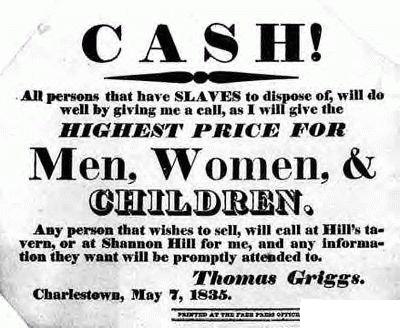
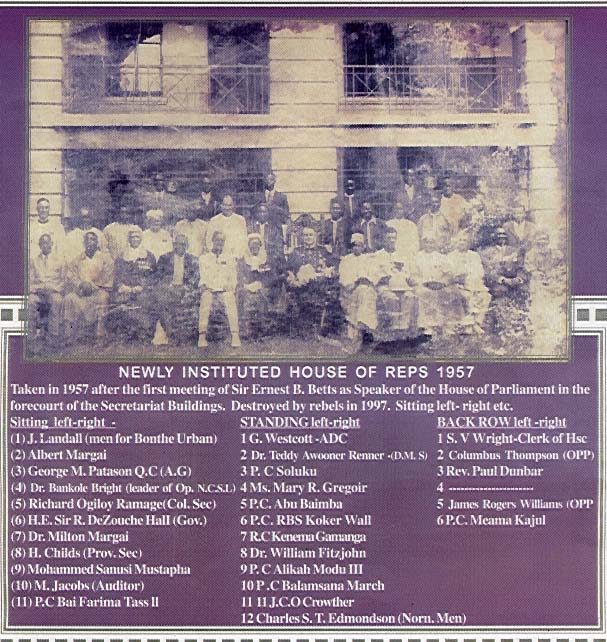
K*D*Y* SOME BRIEF NOTES ON THE KRIOS OF SIERRA LEONE Background points to provide basic information for late 20th and early 21st centuries descendants. 1. The constituents that evolved into the KRIO by the middle of the 19th century - a. The Black Poor - the original settlers of the Province of freedom (1787). b. The Nova Scotians from Canada - freed slaves that had helped the British fight the American War of Independence. They restarted the Colony in 1792. c. The Maroons from Jamaica (1800). d. The Liberated Africans 1808 - 1860. Rescued slaves from all over the sub-region including some from tribes in the provinces of Sierra Leone. The Yorubas were the largest single ethnic group among the liberated Africans hence the culture of the Krios was profoundly influenced by the Yoruba culture. That is why today there are the Christian Krio and the Muslim Krio (the Marabout) descendants. 2. The Krios underscored the aims of the Philanthropists of the 18th century, William Wilberforce, Granville Sharp, James Mansfield and others, who helped to guide this small group of blacks (Africans) to European civilization, who would then go on to spread that civilization throughout Africa. This was done through the diaspora of the Krio who went to places out of Sierra Leone (e.g. Gambia, Gold Coast (now Ghana), Nigeria, Fernandi - Po, etc.) and established institutions and implanted Victorian values on the people. This brought about a cosmopolitanism that was a distinct feature in the history of the Krios. 3. The Krio can be seen as a Diaspora. The roots of their society came from the returnees from Europe and the Americas and from the coastal tide of slaves from all over the sub-region who were being taken across the seas to the 'New World'. 4. In this diasporic constituents efforts are now being made to renew links between the Krios in Sierra I Leone and the blacks in Nova Scotia and Jamaica. 5. The place of the Krios in the modern setting in Sierra Leone. While they believe that the are Sierra Leoneans and that Sierra Leone is their country, they still experience some discrimination. It is also strongly alleged among the indigeneous people that the Krios were the beneficiaries of the British since they had many "positions" during the colonial period. Therefore, the current perception is that they have had their days. As a consequence of this thinking, the Krios find themselves marginalised and are subjected to subtle discrimination. The reality is that the Krios did not get the 'goodies' under the British. At times the relationship with the British got so intense that it flared up in dramatic ways as in 1919) and 1926. 6. What needs to be done now. a. the villages, the homes of many Krios, have deteriorated and are desolate - a situation that the rebel incursions of 1997 and 1999 made more complex. Krios should demonstrate a determination to rebuild the villages once more. b. the government should harness all the potentials of the peoples of Sierra Leone to work for the development of the nation as a united country. Many Krios will he keen to have this happen. By Cassandra Garber, President, Krio Disendants Yunion, Sierra Leone. September 2000 ++++++++++++++++++++++++++++++++++++++++++++++++++ PRESIDENT'S MESSAGE 2009 Superstition and superstitious beliefs exist among every ethnic group around the world - white, yellow or black. For example, the Anglo-Saxons will never pass under an upright standing ladder as that for them will be inviting bad luck. To the Chinese brooms are not to be kept inside the house during the New Year period and no sweeping of the house is allowed because this will result in bad luck for the household. Similarly, there is nothing derogatory for such tendencies to be found among the Krios. Many are the beliefs that condition some of our behavioural patterns. From early childhood, we learn to expect unusual happenings either of a joyful or of a mournful nature during every LEAP YEAR. Accepting this premise, I will venture to state that the LEAP YEAR 2008 can be termed "ANNUS MIRABILIS" for us of the Black race generally as well as for us of the KDY in particular. One momentous development that must be highlighted to justify this claim is that of the selection across the Atlantic Ocean of our Black brother Barrack Obama as the Democratic candidate for the forthcoming presidential elections in the United States of America. It is uncanny that this historic development should happen in the year and around the time marking the 40th anniversary of Dr Martin Luther King's unforgettable speech of "I have a Dream" highlight these details to bring home to you, descendants of the BLACK POOR, NOVA SCOTIAN'S, MAROONS and LIBERATED AFRICANS the indisputable kith and kin of both MARTIN LUTHER KING JNR and of BARACK OBAMA, the truism of always standing up for one's rights. The now common place excuse for cowardly inaction that being a minority group in a community or in the country implies the forfeiture of rights on one hand and or the painful resignation to acts of trespassing on one's real inheritance by barefaced felons on the other hand. If the past generations of Blacks like Mrs Rosa Parkes of the Public Transport Saga in Alabama or like Dr Martin Luther King leading to the civil rights period had renounced their rights because of their very obvious status of being a minority ethnic group in the dominant White American states, the world today would not have witnessed the breath taking scenario of the Denver Democratic convention of 26th 29th August 2008. I will continue to stress on the benefits resulting in our pulling our resources together. We are all blessed with different abilities - some with physical strength, some unique talents, some fiscal worth and some leadership qualities. Many of us have regrettably adopted the attitude of "you in your small corner and I in mine". This is a defeatist outlook and counter-productive in the long run. The positive events of this year 2008 should provide a stimulus for those sitting on the fence for them to jump on to the band wagon for the progress of our country in general and the improvement of the standard of living of the peasant communities of our homestead in particular. Our ancestors tried to inculcate in us the virtues of togetherness. The raison d'être of many social events such as "pul na doh", "put stop" or even the "awujoy" that some modern thinkers poo-pooh as being demonic etc is basically to cement the strong family ties even to the tenth degree. We all have cause to rejoice at the successful election as Mayor of the Municipality of Freetown of Mr Herbert Geo-Williams a Krio, the son of two educationists (deceased) of Freetown who in their capacity as Head teachers, the father of the Wilberforce Village Primary, the mother of Juba Primary and Fergusson Street Primary contributed splendidly to the solid upbringing of thousands of little Sierra Leoneans irrespective of their ethnic or religious background. Present generations of krios should be delighted that yet again the Powers-that-be have upheld the entrenched tradition affecting the mayoralty of this ancient city the first south of the Sahara to assume a prestigious status. We are defacto committed to give maximum support to the new administration as they tackle the onerous task of the implementation of "SALUS CIVIS SUPREMA EST LEX" (The welfare of the people is the highest law). And for us KRIO WOMEN!! are we discouraged, thinking all is lost? Rather, we have to count as a supreme blessing to ourselves - one and all, the appointment of Miss Andrina Coker to the highly elevated position in the finance circle, the Deputy Governor of the Central Bank of Sierra Leone by H.E. the President. At the national and international levels Miss Coker's performance is faultless at all times. Her diligence, probity and sense of responsibility were unrivalled. So, this selection has been made not by dint of patronage or of graft but by merit. Daughter of the former Financial Secretary, Mr Elkannah L. Coker, a solid stock from Hastings village, an unimpeachable civil servant in his days, we agree that "if dis uman nor no usay i dae go, i no usay e kÉmÉt fÉ true". Bravo to her, she has done us proud. During this LEAP YEAR 2008, fate has been kind to KDY. The Home branch as well as three of the overseas branches have had successful fundraising activities. In addition, the trial shot of the Health Care Project at York Village carried out on Friday 14th June went on with extraordinary gusto. The corps of Health Care personnel including doctors from the KDU Texas Branch in USA through the aegis of KDY Fritong, administered FREE medical service to a record number of over 200 patients. The focus of this project is not only to refurbish the Health Centre and staff quarters but eventually to take on the day to day medical operation covering York and the surrounding villages/hamlets etc. Deserving pupils in six secondary schools are still beneficiaries of scholarship awards. Two new awards, "The Patrick and Saffie Branche Memorial Awards" at the St Edwards and St Joseph's have been added to the list. This is very encouraging to us at the home front. Krios in the Diaspora have awakened to the clarion call to help the less favoured in the Homeland. Our resolve according to our motto is "Le wi ep wisef". We must not dissemble no matter the odds. Let us endeavour to make the year 2009 an improvement on the ANNUS MIRABILIS records of 2008. God bless us all. Cassandra Garber, JP. ++++++++++++++++++++++++++++++++++++++++++ KRIO DISENDANTS DONATE US$1,000 TO KATRINA VICTIMS The "Krio Disendant Yunion" (KDY) of Sierra Leone made a donation of $1,000 to the New Orleans hurricane Katrina victims. The President of the union Mrs Cassandra Garber made the presentation to the American Ambassador, Thomas Hull on 26 October 2005 at the American Embassy, Walpole Street, Freetown. This gesture is unique considering that Sierra Leone is a donor driven economy and every sector in the country, government or private are looking for aid and the consideration of making donations has not been the nom. The Ambassador stated that he is very pleased about the donation. He noted that many people in the country have expressed sympathy but the "Krio Disendants" is the only organisation that has showed their sympathy in a practical ay. The President of KDY said that they belong to a minority group called Krios. She related that their ancestors laid the foundation of the settlement of the "Province of Freedom" over two centuries ago. She continued that the homogeneity of the Krio ethnic group has been shaken over the recent thirty years. Circumstances, social and political have provoked a steady brain drain into the Diaspora. The President went on "but no matter where we find ourselves our inbred respect for high moral values is never dented." Mrs Garber also stated, "in spite of our paucity in number, we still hold very strong loyalty to the ancestral beginnings. We were greatly touched by the scenes of untold sufferings of the African-Americans whose communities in New Orleans were devastated by Hurricane Katrina in August 2005." Mrs Garber announced that the Krios of Sierra Leone want "to reinforce the link between the two groups and as a token of this ancestral bond wish to make this small contribution towards the rehabilitation fund." ++++++++++++++++++++++++++++++++++++++++++ FLASHBACK TO HISTORIC POLITICAL STEP This group photograph taken in 1957 is testimony of a great milestone in the political development of Sierra Leone. Apart from it's importance to the Beoku-Betts and Betts family in that their outstanding progeny was installed as the Speaker of the Maiden House of Representatives, and to the Margai families that Dr. Milton Margai was appointed the first Prime Minister of the country, the general citizenry of today needs to be reminded of the historic significance to the country. Following the recommendations of the Keith Lucas Commission the Colonial government put into effect new Statutory Instruments which changed the title of the legislature from the LEGISLATIVE COUNCIL to the HOUSE OF REPRESENTATIVES. This was therefore a tremendous achievement for Sierra Leone being an important step towards self-government. The membership was fixed at 57 with a SPEAKER who replaced the Vice President of the Legislative Council. The electoral provisions were not the same for the Colony as the Protectorate. The Colony qualifications for voting as determined by the Keith Lucas Commission were based on an income of £60 (sixty pounds) per annum or residence of a property with a value of £2 (two pounds). The franchise was given to men and women alike. In the Protectorate there had never been any franchise to vote. This was now granted to the ordinary man and woman with this criteria. Men and women of over 21 years liable to pay tax could vote. Women had to be over 21 years and be literate or must have paid tax. ++++++++++++++++++++++++++++++++++++++++++ ++++++++++++++++++++++++++++++++++++++++++ ++++++++++++++++++++++++++++++++++++++++++ |