http://www.charityfrog.com/charity/site/?700447 TARGET="_blank"><a href=""><img src="http://www.charityfrog.com/linkpad/CF-
EBAY-125x130-anim.gif" border=0" width="125" height="130"></a>
1787 - 2007

We are looking forward with hope to a significant year, 2007, when we will be looking back at the 220th anniversary of the founding of Freetown and the 200th Anniversary of the Abolition of the Slave Trade Act passed by the British Parliament on 25 March 1807.
http://en.wikipedia.org/wiki/Abolitionism

SUPPORT TO MARK 2007

2007 will commemorate the bi-centenary of the abolition of the Transatlantic Slave Trade.

We need a network of partners from the private, public, voluntary and community sectors, all dedicated to ensuring that this anniversary is celebrated throughout the year.

We must seek "to ensure that the suffering of our ancestors, many of whom lived and died in bondage under one of the most inhuman atrocities in world history, is never forgotten, lest it should happen again." Bishop Dr Joe Aldred, Chair, Breaking the Chains Network, West Midlands and Chair, Council of Black Churches (2006).

+++++++++++

JESUS, I Trust In You!

Lord, may my smile be sunlight for others.

May my words heal the broken heart.

Help me to show your love and compassion

to strangers and to those in need.  Amen.

Useful Links


OPINION


After careful thought and consultation that "silence can mean consent", it has been agreed that we should respond to Dr Blyden's recent article "Cassandra Garber recklessly exposes Krios to danger in Sierra Leone!  By Dr. Sylvia Olayinka Blyden (A Krio)" AWARENESS TIMES, Sierra Leone News & Information, Jun 28, 2007.

Why should we Krios of Sierra Leone continue to suffer in silence?  Or would Dr Blyden et al prefer the Krios to sit back or just die? Thank God for people of integrity like Mama Garber who have the courage to speak out, without fear or favour, affection or ill will.  Mama Garber reminds me of, e.g., the late Dr Martin Luther King Jr.  At the time when it was fashionable to be 'popular' and a far greater more dangerous time in the U.S.A., his clergy colleagues and others said he was irresponsible and putting his people at risk.

Our vote is 100% for Mama Garber to who we say thank you and remember, you are not going to be loved by everyone, even those you are fighting for.  That's life.

"For evil to succeed, it's for good people to sit down and do nothing."  Lonta

Ronald A. Lisk-Carew
Chair
Sierra Leone Bicentenary Trust
Registered Charity No. 700447 England


FURTHER STEPS FOR IMPROVEMENT IN SIERRA LEONE
By Ronald Andrew Lisk-Carew, 24 June 2004

Following my article "The Changed Face Of Sierra Leone" (03 February 2004), a wide range of views were expressed.  Some encouraging views articulated a need for the improvement of life in Sierra Leone and included a plea for the immediate publication of an annual Revenue Statement and an Action Plan setting out detailed Local and National policies for open community debate.

The main priority for several people, as a focus point, is decent housing for all.  These should include basic facilities, because, it is suggested that this will have a positive impact on health and other social issues; bolster employment prospects in the whole country and thereby secure lasting peace, leading to the prosperity which the people of Sierra Leone very much deserve.


************************************************

The Changed Face Of Sierra Leone.

I have decided to document my observations and comment about Sierra Leone after 23 years.  I am doing this today, (Tuesday, 03 February 2004) three weeks after my return, so that I am not too emotionally negative soon after I came back to England feeling very distressed at what I saw there or too complacent much later.

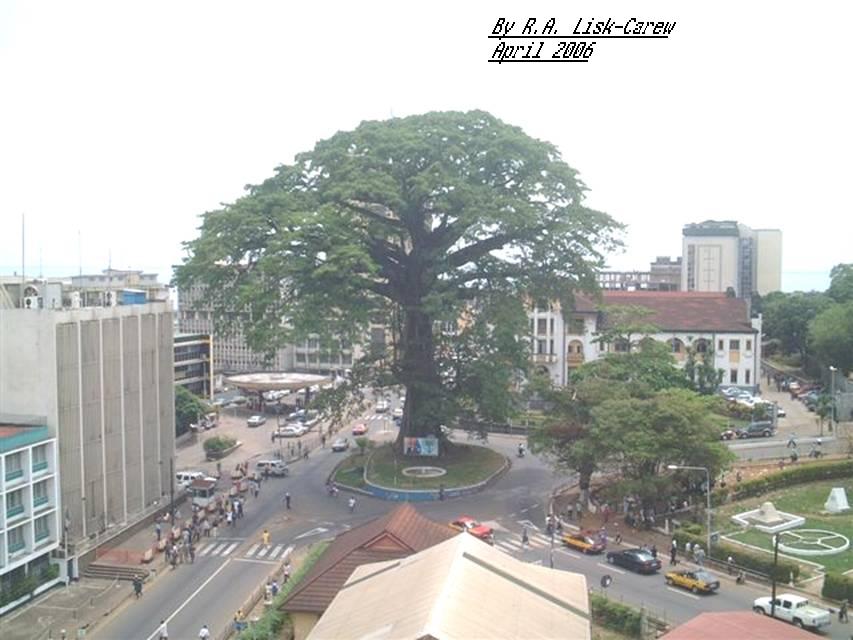
I will title this article "The Changed Face Of Sierra Leone."  I was nervously excited to return home.  When I got there it was a far cry from my last visit in July 1980.  At that time most things were in good condition, for example, streetlights met international standards.  Now there are no streetlights anywhere to be seen.  Even the street lighting columns were absent.

On the whole, it was good to return home (for Christmas and New Year) after 23 years away.  I was happy that there was no sign of starvation.  In general I was very sad to witness for myself the reported problems that people are facing.

Apart from the fact that I missed very close relatives and friends, I was most disappointed about the persistent water problems and to see very many young people without employment and just 'hustling' to survive.

I agree with many people who said that, "everything is a priority here" (referring to the shattered infrastructure; desperate environmental issues; terrible roads; dreadful water supply; appalling electricity, et cetera).  I believe that Sierra Leone lacks development but a lot can be done in the short term.  One person said, "Sierra Leone is crying, Sierra Leone is dying".  Others said, "Sierra Leone is messed up"; "development is not possible in Sierra Leone because the government, Local as well as National, are so ineffectual" and "corruption is still a big issue".

THE ENVIRONMENT

I felt welcome and fairly unthreatened, however I was intimidated by the methods used by the many people persistently 'hustling'.  This makes some people feel unsafe.  I was struck most by the way people responded to the adverse situation but disheartened by the fact that so many are forced to begging or engaged in very petit street trading all over the city to survive.  I am encouraged to observe that the general public are still kind, friendly and helpful.  However, pollution from exhaust fumes is seriously damaging to public health.  Government need to tackle the rubbish that piles up on roads and drains.

There are too many 'traders' and young people hanging around with nothing to do.  Competent government will see that there is proper planning for commercial and residential areas.  Roads need to be clean and tidy if there is not to be an epidemic soon.  Government don't seem to have any strategy, or power to tackle unplanned building on our once attractive hills and mountains.  Visually, this makes the country look unsightly.

WATER

It is essential that the water supply facility is upgraded for the future and damaged water pipes mended promptly to help maintain the pressure for consistent supply.

EMPLOYMENT

One of the key problems, which has to be addressed, is employment.  People must have proper jobs and those in jobs are entitled to consistently expect fair and prompt payment for their labour.  Many workers are not paid on time.  Unless workers are regularly paid in a timely manner, the workforce will be more inclined to become corrupt.  To tackle corruption government must first tackle the causes of corruption.  This is illustrated by the fact that officials openly ask for bribes, which is particularly worrying in respect of air travel and state security.

ELECTRICITY

Most of the time there is no consistent electricity.  Homes and businesses receive electricity intermittently.  This problem needs determined government attention.

HOUSING

People still live in shacks under appalling conditions.  The devastation of property during the war is massive.  Low cost housing is urgently needed nationwide to ease the congestion in Freetown.

TRANSPORTATION

To say that transport is very difficult is an understatement.  When Mrs Lulu Wright wrote about the horrendous traffic situation some time ago, I was optimistic that the government will respond positively to address this enormous problem people face.  In January 2004, it is still a disaster.  Even a minor emergency would trap people and put lives at risk.

In summary, I believe that Sierra Leone is in serious crisis.  There is stability, some post war re-construction but no real development.  I saw a significant downward shift in the management of the country's human, material and economic resources.

I was disillusioned by the local and national government who hold ultimate responsibility for Sierra Leone, especially as this government was elected with great promise and support.  I also now wonder if they have the capability or necessary skills to deal with the problems of the country.  Some people have said that the government needs a complete overhaul.

Like many people, I wonder if there are still negative external influences making things difficult for our governments to make development possible.

I also wonder how people in government feel when they see the many issues facing our country.  I honestly can't see how anyone can claim to be governing Sierra Leone in this condition.  I have to agree with those who claim that "the current politicians in Sierra Leone don't have the country at heart."

People need to see development and improvement in their lives.  To move forward, I, in common with many voices I heard, require committed Sierra Leonean leadership.  Policies aimed specifically at the development and benefit of the entire country are also essential.  We must have Lt. Col. Andrew Juxon-Smith's example of honesty, integrity and discipline as a foundation to build on.  Only once we obtain that kind of leadership, will peace and prosperity prevail in Sierra Leone.

I am extremely grateful and say thank you to everyone for holding the fort and everyone who helped to make my home visit lovely.  I will, with others, continue to pray for our beloved homeland.  I pray for much needed, much better living conditions that people hope to get and deserve through development of value to the whole country if Sierra Leone is not to plunge into another tragedy.

Finally, as I believe that Sierra Leone is potentially the richest country in the world, blessed with more resources than other countries of its size and population, we pray for forgiveness for those responsible for unnecessarily inflicting pain and suffering on God's blessed people whilst looting the nation's great wealth.  We must also pray for committed leadership to take our beloved Sierra Leone forward in Unity, Freedom and Justice.

Ronald Andrew Lisk-Carew
Tuesday, 03 February 2004

************************************************************
*********************


RE:          A HEART WRENCHING PIECE ON SIERRA LEONE
"Most wretched country" (By Lulu Wright)

I am conscious of the unnecessary hardship our people have had to endure, to survive over many years of crisis and that life remains tough and depressing for the majority of Sierra Leoneans in the country today.

I have (with others) been praying for our beloved homeland, Sierra Leone, sharing in the anguish of the war and its effects.  I appreciate the good article "Most wretched country", which critically informs us about life in the capital city, Freetown.  It outlines the real situation that exists there.  I hope to make a helpful and practical suggestion as a well-meaning contribution to the discussions, to address the problems by focussing on the issue of urbanisation.

Urbanisation, like many social problems, is very complex.  Clearly there is no question that government has a significant if not crucial responsibility in these circumstances.

The lack of basic facilities throughout the country (not just in Freetown) is quite rightly alluded to in Mrs Wright's article.  However, I am not too enthusiastic about some of the suggested proposals for alleviating the problem of overcrowding in Freetown.  For example, as the article rightly imply, "Forced Repatriation" is not a useful suggestion.  We must recognise that "Sending people back to 'where they came from' is nebulous and unrealistic since many of their villages do not exist any more and consequently nor do their homes."

There is said to have been "projects since the war ended, to furnish people with basic necessities and send them back to their villages and towns."  Knee jerk reactions may work in the short term but invariably do not last.

I believe that real progress and development can only be achieved by some structural changes coupled with a change of attitude and discipline.  This is paramount for the whole population "together with a culture of law enforcement".

I am more inclined to suggest the creation of New Towns with modern facilities.  I hear Makeni is one of the now deserted 'old' towns that may be a suitable area to begin development fit for relocation / resettlement of people.  It is desperately necessary to build New Towns with the vast wealth of natural resources of our country, to build a better, happy and prosperous Sierra Leone, thereby improving lives by creating sustainable jobs, raising the standard of living; effectively and efficiently administered, should have a chain effect to create employment and economic development.  Teamwork and real partnership between citizens, local and national government is essential for success.

It makes perfect sense to aim for modern facilities because our people deserve better than "to furnish people with basic necessities".  Electrified homes all connected to water mains; with effective water supply and reliable electricity supply; appropriate public transport; a reliable postal system that works; health facilities; modern school buildings; community facilities (including dedicated market areas) and of course clean motorable roads are needed.

I see nothing wrong with the "twenty-five state farms" idea to be "established in different parts of the country".

May God continue to bless Sierra Leone.

With much love, optimism and a hope for a brighter future for my beloved country, Sierra Leone.

Ronald Andrew Lisk-Carew
Thursday, 20 March 2003

-----------------------------------------------------------------
------------------------------------

Lulu Wright used to teach at the Annie Walsh Memorial School, a school that is over 150 years old. She is the widow of Logie Wright, the renowned classical musician.  How very, very, sad what the war has done to Sierra Leone.

Most wretched country

By Lulu Wright

Come and Learn To Do Without
Come to Sierra Leone and learn to do without electricity!
Come to Sierra Leone and learn to do without a telephone!
Come to Sierra Leone and learn to do without water!
Come to Sierra Leone and learn to do without public transport!
Come to Sierra Leone and learn to do without all-year-round motorable roads!
Come to Sierra Leone and learn to do without an internal postal system that works!

Future tourists please take note!

Can anyone wonder why ours is the most wretched country of all? Isn't it unbelievable that in our capital city this day and age, at the start of the 21st century, many of us feel as if we are stuck in a bog?  We cannot communicate freely- even mobile phones run out of juice and cannot be charged.

5 Taxis from East to West

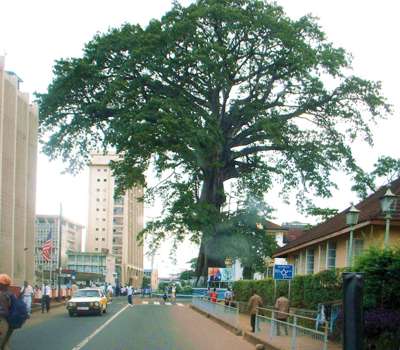
We spend valuable hours looking for water. We cannot travel in comfortable buses provided by our government or some responsible corporation.  We cannot read or sew at night for three out of four days.  Our mail is tampered with by post office workers on the look out for money. We wear our shoes and our cars down on bad roads in this most wretched land of all. I got out of a taxi a few days ago, my third from Wellington (I was to travel by five in all by the time I got home), which deposited me at Clock Tower. I have never felt so disoriented in all my life. It was as if I did not know where I was. It was 6.00 p.m. or thereabouts, and there I was in the middle of nowhere, standing in a sea of bodies surging this way and that. Was this the area in which I went to school and worked for years? Was this my home town? It took me minutes to get my bearings and to decide I needed to aim for PZ roundabout where, with luck, I could get my fourth taxi.

Overcrowded Streets

These vehicles were conspicuous by their absence in the muddle of traffic in and around the pedestrians. When I did see one just past Gibraltar Church, it was stuck in a jam and I was far better off walking. How I got to PZ on foot was a miracle. I was jostled and jolted on all sides, bumped into a dozen times. At others, jets of spittle missed me by inches. Now I love my compatriots dearly- every single one of them, but not when they squeeze me off pavements or spit across my path, or ease themselves profusely practically everywhere. It reminded me of a similar occasion when I was caught one morning just before Xmas, in a wave of walkers from the top end of Kissy Road going towards Clock Tower. At least on that day, most of us were progressing in the same direction. This time the crowd was going eastwards as I battled my way towards the west. But is this what we are to continue to experience in our city? You could not tell where pavements began or ended. Most of them consisted of broken slabs anyway.

The black hole of West Africa

Everywhere was strewn with litter (when is Kissy Street swept?) in this most wretched city in the world. Freetown is one never-ending market with ramshackle stalls all higgledy-piggledy proliferating along streets and pavements. Incidentally what road works are being done now, and where?

The total indiscipline in the new population together with the lack of a culture of law enforcement makes it impossible for the prettiest capital in West Africa geographically speaking, not to be the black hole of West Africa. It is also one enormous urinal. And yet, I heard a comment from a visiting VIP recently, that our President was the best President in Africa or West Africa or somewhere! So the best President presides over the country with the dirtiest, most poverty-stricken capital! I wonder whether H. E. was flattered by the compliment or whether he had cause to blush because he had walked incognito one morning or evening down Kissy Street as I did.  If he had, he would have made some interesting discoveries about the state of his capital and the conditions under which people function, first hand.

Forced Repatriation?

The first task the government has to tackle, I would have thought, seems to be to clear the city of its recently acquired surplus population most of whom do not belong here. Sending people back to "where they came from" is nebulous and unrealistic since many of their villages do not exist any more and consequently nor do their homes. They have become a nuisance, a menace, a threat to the human rights of bona fide Freetown dwellers simply by force of numbers, albeit through no fault of their own.

One has heard of projects since the war ended, to furnish people with basic necessities and send them back to their villages and towns. Quite obviously, a year of gentle persuasion has had no effect. What we need is a three-month deadline after which firm action is taken to entice them to leave. We need to think and act fast. About twenty-five state farms could be established in different parts of the country with IMF relief funds or some other funding the government can surely access, with school, church, mosque, clinic and community centre in each- all simple structures and dwelling houses.

Idlers to work in State Farms.

Then all the idlers, those men who stand in serried ranks along Lightfoot-Boston Street impeding the passage of pedestrians and traffic, the seething masses of Kissy Street and Clock Tower should be obliged to work on the newly created farms and help improve our food production. Look at the quality of rice most of us are now obliged to eat! Anyone who cannot produce convincing evidence of residence in Freetown since 1991, or regular employment i.e. of one partner in a couple, should be screened and firmly encouraged to go. Their uncontrolled presence in the city together with the manifold implications as described above, is one of the strong reasons, only I am sure, for our placing at the bottom of the world ladder of poor nations. Migration and urbanization are not new phenomena. They happen in all cities to a greater or lesser degree.

Screen and Re-locate But our case is exceptional.

Because of the war, this little strip of Sierra Leone skirting a few hills is now home to more than half the population of the country. One year after the end of hostilities, there is no evidence whatsoever of the city being cleared of displaced people. We need a concerted, fearless effort on the part of government, to carry out a screening and re-locating process. A government, which does not have the guts to take decisive action on such an issue, is content to see us designated last country on the scale. We need to see proof that something is actively being done. To make pious pronouncements about people being resettled and to live in the turmoil and disorganization of present-day Freetown are two different things.

City Council Useless

The City Council can do nothing worthwhile since all their efforts are systematically neutralized by masses of people fouling up streets and drains and virtually exhausting utilities already stretched to the limit.  So all the Council workers can do, I imagine, is shuffle around their offices wringing their hands in frustration. They simply cannot cope with the numbers. If the government cannot take effective action because it is afraid of losing the votes of thousands of idlers and hangers-on who are happy to perch on the fringes of Freetown life even if they only sell safety-pins on a non-street-trading street, then we shall remain at the bottom of the international ladder- the most wretched state of all!

Poorest country, most wretched country!

How long can it go on using the war was an excuse? Five years last of all nations! A friend of mine said lately 'This must be some kind of a record!' And are we the Sierra Leoneans content to sit dumbly by while we are placed last for a sixth year? For goodness sake, let us shake ourselves and challenge the government to do something immediately or resign.

Hopeless System

Governments have fallen elsewhere on lesser issues. A capital city that dreams of attracting tourists cannot boast of a regular organised public transport system. Who would have imagined that the Freetown of colonial days with its regular services from town center to suburbs and villages, infrequent but reliable, and the Double-Decker era  with its regular twenty-minutes service from Cline Town to Congo Cross, would degenerate to a state of no public transportation at all except for private taxis and miserable mini buses from which seats have been removed and replaced by metal benches? Of course - we're last! Most wretched country of all!

No regular public transport, no regular electricity supply, no water supply at all for months- even years as in my case, inside the city, no decent roads, no proper telephone system. Responsibility of the Government Surely at least one of these services could have been brought up to scratch by now if proper targets had been set and the right moves made. One good move would have been to sack the whole lot of inefficient workers and replace them by small teams of foreigners from China, USA, Japan, Sweden etc. for a period to train new staff and set the systems right. Otherwise, foreign experts could have been invited to head these services for a period.

Look at the Police and the Army!

What was possible there could have happened with the telephones, water etc. We must lift ourselves out of the rut; and this is not a case of people doing nothing but talk and expecting Government to do everything. The responsibility lies squarely with the Government.

Lonta!

JEWright
Jeannette E Wright (MS)

=================================================================
====================


NEW MILLENNIUM

To many, the millennium (the year 2000) is going to be a big affair - the dawn of a new millennium could be the start of a new era for Sierra Leoneans - not something everyone gets to see during their lifetime.

I am optimistic that the changing of the year could bring with it a host of major developments for Sierra Leone in particular, Africa and the developing world in general.  Are we going to be able to meet the challenge? Are we prepared to contribute to making our beloved Sierra Leone better in the future?

We can seriously consider making the millennium year a very special time. As many of us from around the world who can, should return to Sierra Leone to celebrate and pay our respect to family, friends and fellow Sierra Leoneans. School organisations can plan reunions of past and present pupils' functions (I suggest a concert for my Secondary Technical School) to help raise funds for our alma mater. This will also help Sierra Leone in a positive way to progress.

The goal is to 'improve on previous best' in terms of peace, unity, freedom and justice for our homeland.  I believe if we go home for the year 2000, this will provide a unique opportunity to appreciate once more, the splendour of Sierra Leone; for school friends who now live and work all over the world to meet-up once more and to reminisce about "the good old days".

By Ronald A. Lisk-Carew

_________________________________________________________________

To mark the 200th anniversary of the founding of Freetown, the examples of the late Wallace Johnson, Sydney Boyle, et al, inspired me in 1987 to write "A Short History of Sierra Leone".


A SHORT HISTORY OF SIERRA LEONE
(1787 - 1987)
[With grateful acknowledgements to "A History of Sierra Leone" by Christopher Fyfe and "The Creoles of Sierra Leone" by Leo Spitzer].

____________________________________

On May the 10th 1787, a convoy of about four hundred settlers from England entered the Sierra Leone River. On May the 15th the people disembarked and started their settlement (first named Granville Town - after Granville Sharp, one of a group of philanthropists who successfully pressured the British government to permit the transportation of the emancipated Negroes to Sierra Leone - then Province of Freedom, and finally Freetown).

The Sierra Leone Company was chartered, listing the famed humanitarians William Wilberforce, Thomas Clarkson, Granville Sharp, and Henry Thornton among its directors in 1791. The company aimed to substitute legitimate commerce between Africa and Great Britain for the slave trade and was empowered to take over all lands in Sierra Leone which had been acquired by purchase or grant from indigenous chiefs.

The Creoles who settled around Freetown in Sierra Leone shared a diverse and unique heritage. Although born in Sierra Leone, they were descended from immigrants: a group of "Black-Poor" sent there from England in 1787; a group of auxiliaries from the United States who had fought for the British in the Revolutionary War and who were later relocated in Nova Scotia; and a group of Maroons who had revolted from their slave masters in Jamaica in 1800. The fourth and largest immigrant group was made up of the Liberated Africans (Recaptives) - men and women freed from slave ships by the British anti-slavery squadron in the years after abolition. These groups, together with smaller numbers of others, formed a colony literate and British in manner. The Creoles developed flourishing newspapers in which they gave lively expression to their sentiments and social views, in prose as well as in verse.

The Creoles were even more than their fore-fathers, taught to prize Europeanization and the status that it conferred in the colonial order. Toward the end of the nineteenth century, however, during the heightened racism which characterized the age, Creoles were increasingly rejected by their British mentors and began to undergo a crisis of cultural self-confidence. In these circumstances, many Creoles decided to look within their own society, to analyze its character and values, even questioning the major premise on which their culture was based - the validity of the African adaptation of European ways.

Creole involvement in the National Congress of British West Africa (NCBWA), the major West African movement of the first quarter of the twentieth century, was the clearest indication of their post-war shift from cultural introspection to political action. The NCBWA emerged from the same cauldron of post-World War 1 expectations that had engendered movements like the first Pan African Congress, held in Paris in 1919 under the leadership of W.E.B. DuBois, and Marcus Garvey's United Negro Improvement Association in the United States. In 1918, at the insistence of Messrs. J.H. Thomas and Cornelius May, a committee was formed to take the first practical steps toward organizing a conference of West Africans. In March 1920, at the instigation of the well-known Accra barristers, J.E. Casely Hayford and T. Hutton-Mills, the first conference of the NCBWA was convened in the Gold Coast (now named Ghana). Delegates from Nigeria, the Gambia, Gold Coast, and Sierra Leone participated, of which Dr. Herbert C. Bankole-Bright (a representative of Sierra Leone) was the General Secretary.

By 1945 the direction and shape of the political and social developments which would lead to independence for Sierra Leone was discernible. The formation of the West African Youth League (Sierra Leone Section) [Motto "Liberty or Death"] of which Alphonso Sylvester Lisk-Carew was President; Isaac T.A. Wallace-Johnson was the Organising Secretary, and S.M.O. Boyle, General Secretary - now living in Birmingham, England - was the first extensive attempt by Creoles to reach out beyond the confines of their own ethnic group and self-interest and to form an alliance with the indigenous inhabitants based on racial unity and perception of imperialism as exploitative of all peoples of African descent in Sierra Leone, not just Creoles.
Despite British attempts to halt the growth of the Youth League movement, the seeds for national co-operation remained alive and contributed to Sierra Leone's independence.

In 1799 Freetown became the first municipality in Africa.

On April 27th, 1961, Sierra Leone became a Sovereign and Independent State within the Commonwealth of Nations, and was on the 27th September of the same year, admitted as the 100th Member of the United Nations. Sierra Leone became a Republic on the 19th of April, 1971.

Sierra Leone is also a member of OAU, ECOWAS, the Mano River Union and is an ACP State of EEC.

By Ronald A. Lisk-Carew, JP [May 1987]
in Celebration of
THE BICENTENARY OF
SIERRA LEONE
1787-1987
and mark the founding of
SIERRA LEONE BICENTENARY TRUST v1787-1987
Registered Charity No. 700447 England
_____________________________________________________________________

Governor Clarkson's Prayer
FOR
Sierra Leone


O LORD, I beseech Thee favourably to hear the prayer of him who wishes to be Thy servant, and pardon him from presuming to address Thee from this Sacred Place.  O God, I know my own infirmity and unworthiness, and I know Thine abundant mercies to those who wish to be guided by Thy will.  Support me, O Lord, with Thy heavenly grace, and so enable me to conduct myself through this earthly life, that my actions may be consistent with the words I have uttered this day.  Thou knowest that I am now about to depart from this place, and to leave the people whom it has pleased Thee to entrust to my care.  Guide them O merciful God, in the paths of truth and let not a few wicked men among us draw down Thy vengeance upon this Colony.

Ingraft into their hearts a proper sense of duty, and enable them through Thy grace to conduct themselves as Christians, that they may not come to Thy house without that pleasing emotion which every grateful man must feel when paying adoration to the AUTHOR OF LIFE.  But I have great reason to fear, O Lord, that many who frequent Thy Church do not approach Thy presence as becomes them, and they may partly be compared to the Scribes, Pharisees and Hypocrites.  Pardon, O God, their infirmities; and as Thou knowest their weakness from the manner in which they have formerly been treated and the little opportunity they have had of knowing THY WILL and getting acquainted with the merits of THY SON, OUR SAVIOUR JESUS CHRIST, look down upon them with an eye of mercy and suffer them not to incur THY displeasure, after they have had an opportunity of being instructed in the ways of Thy commandments.

BLESS, O LORD, the inhabitants of this vast Continent, and incline their hearts towards us that they may readily listen to our advice and doctrines, and that we may conduct ourselves towards them so as to convince them of the happiness we enjoy under THY ALMIGHTY protection.  Banish from this COLONY, O LORD, all heathenish superstition, and let the inhabitants know that Thou art the ONLY TRUE GOD in whom we live and move and have our being.  If these people who profess Thy religion will not be assured of Thy superior power, convince them, O GOD, of Thine anger for their profession without their practice; for Thou knowest I have brought them here in hopes of making them and their families happy, both in this world and all to eternity.

But I fear they may not be governed by my advice, and that they may ruin themselves and their children forever by their perverse and ignorant behavior.  I entreat Thee not to let their evil example affect the great cause in which we have embarked, but I would rather see this place in ashes and every wicked person destroyed than that the millions we have now an opportunity of bringing to the light and knowledge of Thy holy religion should, from the wickedness of a few individuals, still continue in their accustomed darkness and barbarism.

Thou knowest that I have universally talked of Thine apparent virtue and goodness, and have praised Thy name for having permitted me to be the servant employed in so great and glorious a cause.  If I have been deceived, I am sorry for it, and may Thy will be done; but I implore Thee to accept the sincerity of my intentions and my best endeavours to improve the talent committed to my care.  Only pardon the infirmity of my nature, and I will trust to Thy mercy.

Should any person have a wicked thought in his heart or do anything knowingly to disturb the peace and comfort of this our Colony, let him be rooted out, O GOD, from off the face of the earth; but have mercy upon him hereafter.

Were I to utter all that my heart now indicates, no time would be sufficient for my praise and thanksgiving for all the mercies THOU has vouchsafed to show me, but as Thou art acquainted with every secret of my heart accept my thoughts for thanks.  I have no words left to express my gratitude and resignation to THY WILL.  I entreat Thee O GOD, if nothing I can say will convince these people of Thy power and goodness, make use of me in anyway Thou pleasest, to make an attonement for their guilt.  This is an awful, and I fear too presumptuous a request; yet if it should be Thy will that I should lay down my life for the cause I have embarked in, assist me, O Lord, with Thy support, that I may resign it in such a manner as to convince these unbelieving people that Thou art GOD indeed.

May the heart of this COLONY O LORD, imbibe the spirit of meekness, gentleness and truth; and may they henceforth live in unity and godly love, following as far as the weakness of their mortal natures will admit that most excellent and faultless pattern, which Thou hast given us in Thy Son our Saviour, JESUS CHRIST, to whom with Thee and the HOLY SPIRIT, be all honour and glory, now and forever. - AMEN.

***************************************


Governor John Clarkson - committed abolitionist and promoter of the Sierra Leone Colony.

John Clarkson began serving in the British navy at the age of eleven. He was concerned with the plight of people less fortunate than himself. Through his brother Thomas Clarkson, he became involved with the English Abolitionists. This included the famed Granville Sharp, who had brought to court the case which ended slavery in England. Sharp needed somebody to travel to Nova Scotia to promote the Sierra Leone Colony to the free blacks. As a navy man, a committed abolitionist, and a shareholder in the Company, Clarkson was perfect for the job.

Charged with this responsibility, Clarkson traveled from England to Halifax in 1791 to recruit Blacks for Sierra Leone. Thomas Peters has arrived before Clarkson and had began telling blacks about this opportunity.  Dundas, the Colonial Secretary of State, had written to Governor Parr urging that he assist Clarkson in his efforts, but privately, neither Parr nor Dundas were very enthusiastic about the scheme.

Clarkson was a naturally enthusiastic and emotional character. Although he vowed (and was told) to lay out the company's proposal impartially, Clarkson's enthusiasm and sympathy for the plight of the Black Loyalists soon got the better of him. Clarkson began promoting the colony wholeheartedly instead of merely laying out the proposal and signing up those who wished to leave. Clarkson also made some unwise promises, particularly in suggesting that there would be no land taxes (quitrents) in the colony.

Upon his arrival he spoke to Blacks in many areas of the province including Preston, Birchtown and Shelburne. So many people signed up with the company, that Clarkson was unable to deal with all the issues and disputes. He appointed Thomas Peters, John Ball and David George to deal with any problems on his behalf. The amount of people who signed up exceeded the number the company was prepared for, so after awhile Clarkson had to accept people on the condition that there would be room for them. He planned a second trip later, but of course, that never happened.

While preparing for the embarkation Clarkson was involved in all aspects of planning. He supervised the refitting of the vessels, the cleaning and drying of the sleeping areas, the completion of the contracts and preparations of the provisions. Clarkson even took the time to ensure that the captains of the boats had instructions to treat the passengers well.

Clarkson became very ill before departure and nearly died; he had to be hoisted onto the ship before leaving. The flotilla left for Sierra Leone on 15 Jan 1792. The boats carried 1190 free Black emigrants. There was a great amount of sickness during the voyage that resulted in sixty-seven deaths, Clarkson himself did not die, but was very feeble upon arrival.

When he rowed ashore he was greeted with the news that he had been appointed as the new governor of the colony. Clarkson was exhausted, but he tried to do his best. He had the difficult task of meeting the high expectations of the Black Loyalists. Many saw Sierra Leone as a promised land of freedom, and were disappointed when the old problems of corruption and land distribution re-emerged.

Clarkson soon had a confrontation with Thomas Peters, but most of the settlers sided with Clarkson. Peters' discrediting and death soon after helped end that dispute. Still, there were constant problems to deal with. The land distribution was slow and the government was not what the settlers had been led to believe. Clarkson constantly encouraged patience and tried to mediate the disputes. His health had been poor since he had left Nova Scotia, and the constant demands exhausted him. Clarkson left for England in December of 1783 to rest and recover, only 8 months after he had arrived.

Once Clarkson had somewhat recovered, he was summoned to a meeting of the directors of the company. They offered him a generous pension if he would resign the post of Governor. Clarkson refused, and they promptly fired him.

Clarkson continued to donate money to the colony. He tried to get a fair hearing for some petitioners from the colony when they travelled to England seeking a change in government, but the experience had disillusioned him. Clarkson remained active among the abolitionists, even donating money to the colony, and died in the 1850's.

Story: Exodus

Peters in London          Mission to America          Passage to Africa          Freetown

People

Thomas Peters          John Parr          David George          Cato Perkins          Stephen Skinner

Documents


++++++++++++++++++++++++++++++++++++++++


http://www.charityfrog.com/charity/site/?700447
SIERRA LEONE BICENTENARY TRUST
REGISTERED CHARITY NO.700447 ENGLAND

SIERRA LEONE BICENTENARY TRUST (SLBT) offers young people new opportunities to develop to their full potential.